
Advantages of Teledentistry Technologies

By Tracye A. Moore RDH, MS, EdD and JoAnn Rover, RDH, MPA
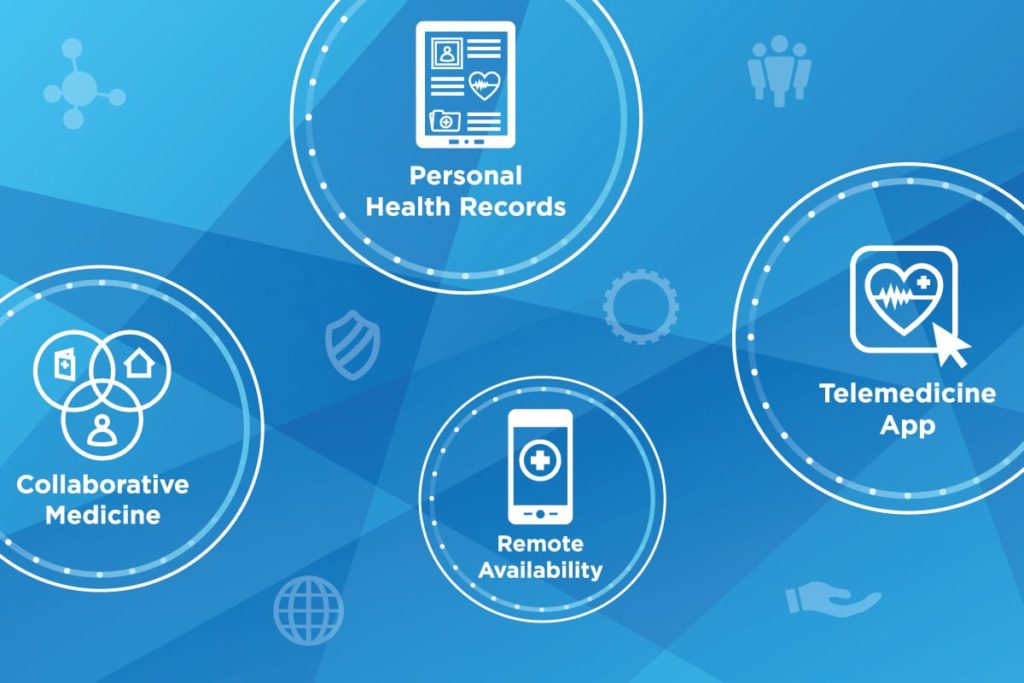
Telemedicine is used to describe the use of technology to facilitate communication and care between patients and health care providers in separate locations.1–4 Telehealth is a universal term that incorporates technologies that fall under telemedicine, but also transects dentistry, pharmacy, health education, counseling, physical therapy, behavioral health, and home health.1,2,5–8 Telehealth employs innovative technologies, such as kiosks, website monitoring applications, mobile phone apps, wearable devices, and video conferencing to provide care by permitting real-time, interactive communication between the patient and a practitioner located at a distant site (Figure 1).1,2,5,7,8 The efficacy of telehealth depends on hospitals, dental offices, and medical offices converting from traditional paper patient charts to electronic health records (EHRs) that include both medical and dental information. Four modalities of telehealth utilize EHRs: synchronous (live video), asynchronous (store-and-forward transmission, or SFT), remote patient monitoring (RPM), and mobile health (mHealth).1,2,5
* References can be found in the original article via the link below.
Read Article





Responses