
Why Digital Intraoral Scanning Is the Future of Dentistry
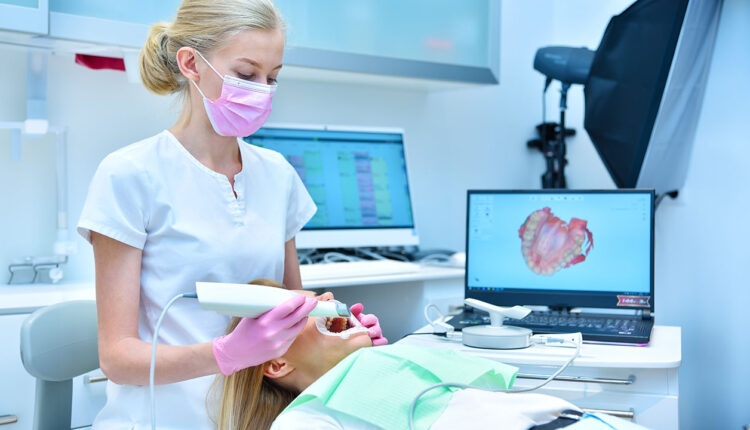
Gone are the days of hand-mixed materials — intraoral scanners have taken their place. Dental hygiene has expanded to include new forms of technology, including digital intraoral scanners, that impact the way clinicians practice.
Since their initial introduction, digital intraoral scanners have become much more user-friendly. The use of computer-aided design/computer-aided manufacturing (CAD/CAM) began in 1973 with the introduction of optical impressions, now commonly known as digital impressions.1-3
Today, approximately 40% to 50% of dental offices use digital intraoral scanning, and this percentage is only expected to grow.1 Current systems include a scanner with the head created to fit within the oral cavity to capture files of the entire dentition. The files can be used to create restorations as well as appliances either within the dental office or via a lab. While digital intraoral scanning once focused solely on restorative needs, the opportunities for its use have expanded to applications in orthodontics and pathologies such as caries, erosion, and oral cancer. In modern dental practices, this technology can also be integrated into the dental hygiene appointment.1-4
* References and figures can be found in the original article via the link above.




Responses